ACM Panel Installers: Why Installation Expertise Matters for Building Facades
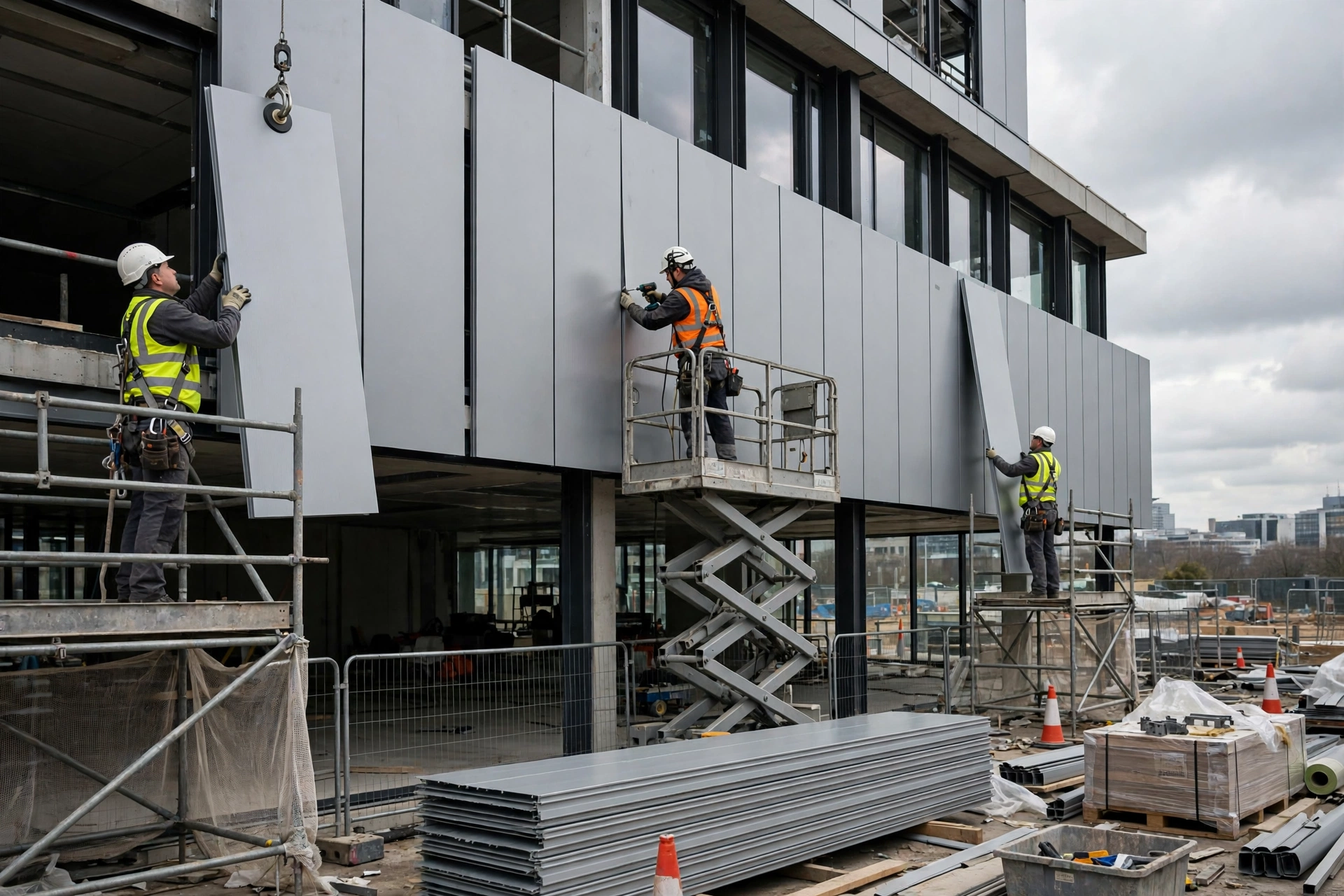
Even a carefully designed building facade can experience problems when installation details are overlooked. Uneven joints, incorrect attachments, and insufficient movement allowances may affect both appearance and performance. For this reason, selecting qualified acm panel installers is an important part of planning a composite cladding project. Experienced installation teams understand that successful facade construction requires precision, coordination, and attention to technical specifications.
The Responsibilities of ACM Panel Installers
ACM panel installers work with composite cladding components to create finished architectural surfaces. Their responsibilities can include reviewing drawings, confirming measurements, preparing supporting systems, positioning panels, and completing attachment details. The exact scope varies depending on the project and contractual arrangements. Installers must coordinate their work with the design team, fabricators, and other construction trades.
Why Installation Accuracy Is Essential
Maintaining Consistent Panel Alignment
Architectural drawings often specify precise panel layouts. Small installation errors can become highly visible when repeated across a large facade. Skilled ACM panel installers use accurate measurements and alignment procedures to achieve consistent spacing and clean visual lines.
Accommodating Thermal Movement
Aluminum responds to temperature changes through expansion and contraction. Without appropriate allowances, this movement can contribute to distortion or stress around attachments. Installers must follow the approved system details to accommodate expected movement.
Supporting Weather Management
Exterior cladding forms part of a larger wall system. Depending on the design, proper installation may involve drainage cavities, flashing, joint treatments, and ventilation details. ACM panel installers must understand how their work interacts with these components.
Important Stages of the Installation Process
Reviewing Technical Documentation
Installation should begin with a thorough review of approved drawings and specifications. Panel dimensions, attachment arrangements, tolerances, and required materials must be understood before work starts. Any discrepancies should be resolved through the appropriate project procedures.
Preparing the Supporting Framework
The supporting structure influences panel alignment and load transfer. Installers should verify that the framework meets the required positioning and attachment specifications.
Positioning and Securing Panels
Panels must be handled carefully to avoid surface damage. Approved fastening methods and installation sequences help achieve the intended appearance and performance.
Inspecting Completed Work
Final checks may include panel alignment, joint consistency, attachment conditions, and visible surface quality. Inspection requirements should follow the project's approved quality-control procedures.
How to Evaluate ACM Panel Installers
Experience with similar facade systems is valuable. Building teams should review relevant project experience, technical capabilities, and familiarity with the specified installation method. Training, safety procedures, and quality-control practices also deserve consideration. Communication is particularly important when a project involves complex geometry or multiple construction trades.
Common Installation Challenges
Construction sites rarely provide perfectly uniform conditions. Unexpected dimensional variations, difficult access, and coordination conflicts can affect installation schedules. Experienced ACM panel installers identify these issues early and work with the project team to develop appropriate solutions. They should avoid unauthorized modifications to engineered details.
The Importance of Safety and Compliance
Facade installation can involve elevated work areas, lifting equipment, and large panels. Appropriate site safety procedures are essential. Installation must also follow relevant building regulations, approved specifications, and manufacturer requirements.
Conclusion
ACM panel installers play a significant role in translating architectural designs into completed building facades. Their attention to measurements, attachments, movement allowances, and installation quality can influence both appearance and long-term performance. Selecting an experienced team is therefore an important project decision. When installers work closely with designers, engineers, and fabricators, they can help reduce construction errors, maintain visual consistency, and deliver cladding systems that meet the project's technical and architectural expectations.








Post Comment