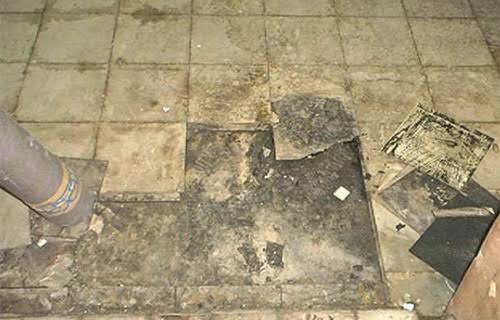
If you’ve ever peeled back an old rug or started tearing into a basement floor, you may have paused and wondered exactly what does asbestos tile look like, and whether the flooring beneath your feet could be hiding something hazardous. The tricky part is that asbestos tile often looks nearly identical to ordinary vinyl flooring from the same era, which is precisely why so many homeowners are caught off guard during renovations. This guide breaks down the visual clues, the history behind these tiles, and the safest way to confirm what you’re actually dealing with before you do anything else.
Understanding Asbestos Tile
Asbestos tile, more formally known as vinyl asbestos tile or VAT, was a widely used flooring material for much of the twentieth century. Manufacturers blended asbestos fibers directly into the vinyl compound because it made the tile more durable, resistant to fire, and considerably cheaper to produce than many alternatives available at the time, which made it an attractive option for builders and homeowners alike.
Production and installation of these tiles peaked between the 1950s and the 1970s, though the material remained in circulation for years afterward. As research into the health effects of asbestos exposure became impossible to ignore, regulations tightened significantly, and manufacturers gradually phased the material out of new flooring products, with most production ending by the late 1980s and a small amount lingering into the early 1990s.
What Does Asbestos Tile Look Like
This is the question most homeowners actually want answered, and the honest response is that asbestos tile typically appears as a thick, dense tile with a slightly waxy or marbled finish. Colors tend to lean toward muted, earthy tones such as beige, gray, brown, or a dull olive green, and the patterns are usually mottled or speckled rather than crisply printed like most flooring you’d find in stores today.
Size and texture offer additional clues worth noting. Many asbestos tiles were manufactured in a distinctive nine-by-nine inch square, though twelve-by-twelve versions also exist and complicate identification slightly. The backing material is often a felt-like paper rather than the smoother synthetic backing used in modern vinyl, and the tile itself tends to feel noticeably heavier, denser, and more brittle when handled or lifted.
Common Locations Where This Flooring Appears
Asbestos tile shows up most frequently in homes and buildings constructed or renovated between the 1940s and the 1980s, spanning several decades of widespread residential and commercial construction. Basements, kitchens, laundry rooms, and utility spaces were especially popular locations for this type of flooring, largely because of its durability and resistance to moisture, heavy foot traffic, and general wear over time.
It’s also remarkably common to discover asbestos tile hidden beneath layers of newer flooring, including carpet, laminate planks, or even a second layer of vinyl installed directly on top. Previous homeowners frequently chose to cover the old tile rather than remove it entirely, which means many people don’t encounter this flooring until a renovation project accidentally exposes what’s been sitting quietly underneath for decades.
Why Appearance Alone Isn’t Enough
While learning what does asbestos tile look like gives you a genuinely useful starting point, visual inspection alone can never provide a definitive answer about its actual composition. Countless non-asbestos tiles produced during the same decades share remarkably similar colors, dimensions, and surface patterns, which makes relying purely on appearance an unreliable and potentially risky method of identification.
Adding another layer of complexity, some contemporary flooring products intentionally replicate vintage tile aesthetics purely for stylistic appeal, meaning a floor that looks convincingly retro isn’t necessarily old or hazardous at all. Conversely, a plain and unremarkable-looking tile could still contain asbestos. Visual clues should always be treated as a reason to investigate further rather than as a final, conclusive diagnosis.
Testing Your Flooring Properly
The only truly reliable way to confirm whether a floor contains asbestos is through proper laboratory testing conducted on a physical sample. Do-it-yourself test kits are widely available and generally involve carefully collecting a small piece of the tile to mail off to an accredited laboratory, though the accuracy of results can vary depending on the kit’s quality and how carefully the sample was gathered.
For homeowners who want greater peace of mind, hiring a certified asbestos inspector remains the safer and more dependable route. These professionals understand exactly how to collect samples without disturbing surrounding material or releasing fibers into the air, and they work with accredited labs to deliver accurate results. Testing costs vary by region, but the investment is often worthwhile compared to the risks of guessing.
Health Considerations Worth Understanding
Asbestos becomes genuinely dangerous primarily when it is disturbed in a way that releases microscopic fibers into the surrounding air, where they can then be inhaled without any obvious warning signs. Intact, undamaged tile that has remained undisturbed beneath carpet or furniture for years typically poses minimal risk, but the situation changes considerably once that same tile is cracked, sanded, drilled, or crumbling apart.
Long-term exposure to airborne asbestos fibers has been associated with serious respiratory illnesses that can take many years, sometimes decades, to fully develop and become noticeable. This extended latency period is exactly why caution matters most during renovation projects, when tiles are far more likely to be cut, sanded, or forcefully removed without the proper protective equipment or safety procedures in place.
Safe Steps If You Suspect Asbestos
If you have reason to believe a floor in your home might contain asbestos, the most important rule to remember is remarkably simple: leave it alone. Avoid sanding, drilling, cutting, scraping, or even dry-sweeping the surface, since these everyday actions are among the most common ways that hazardous fibers become airborne and pose a genuine breathing risk.
In many situations, leaving intact asbestos tile completely undisturbed and simply installing new flooring directly over it turns out to be a perfectly safe and practical long-term solution. If removal genuinely becomes necessary, reaching out to a licensed asbestos abatement professional ensures the entire process follows proper safety protocols and complies with local regulations, which can vary considerably depending on your specific state or municipality.
Removal Versus Encapsulation
When homeowners confirm the presence of asbestos tile and need to decide how to move forward, they generally choose between two main approaches: full removal or encapsulation. Full removal involves trained professionals carefully extracting every piece of the tile and disposing of it according to strict hazardous waste regulations, which eliminates the risk entirely but typically comes with a higher overall cost.
Encapsulation, by contrast, involves sealing the existing tile in place and installing new flooring directly on top without disturbing what’s underneath. This approach tends to be more budget-friendly and considerably less invasive, making it an appealing option whenever the original tile remains stable, undamaged, and unlikely to release fibers if simply left in place beneath a fresh surface.
Comparing Old Tile to Modern Vinyl
Placing older asbestos-era flooring next to modern vinyl tile side by side makes several key differences much easier to spot. Asbestos tile generally feels thicker, heavier, and noticeably more rigid, with a distinctive felt-paper backing, while modern vinyl tile tends to be thinner, more flexible, and backed with synthetic material engineered specifically for easier, faster installation.
Additional clues can come from manufacturing records, old renovation receipts, or even stamps occasionally found on the tile’s underside indicating a production date. If your home was originally built or last renovated before the mid-1980s, that timeline alone is a strong enough reason to treat any original flooring with genuine caution until it has been properly tested by a qualified professional.
Final Thoughts
Understanding what does asbestos tile look like gives homeowners a genuinely useful head start when assessing older flooring, but it should never be treated as the final word on the matter. Color, texture, thickness, and size can all point you in a reasonable direction, yet only certified laboratory testing can truly confirm what’s actually beneath your feet. When in doubt, resist the urge to disturb the flooring and consult a qualified professional before beginning any renovation work, because protecting your health is always worth the extra time and effort involved.
You may also read: Spray Foam Insulation Cost Calculator
Frequently Asked Questions
Can I tell if tile has asbestos just by looking at it? Not with any real certainty. While certain colors, patterns, and sizes are commonly associated with asbestos-era tile, only proper laboratory testing can definitively confirm whether asbestos fibers are actually present in the material.
What years were asbestos floor tiles most commonly installed? Asbestos tile saw its heaviest use between the 1950s and the 1970s, though smaller amounts continued being produced and installed into the late 1980s and occasionally the very early 1990s in some regions.
Are all nine-by-nine inch tiles made with asbestos? No, not necessarily. While this particular size is strongly associated with asbestos-era flooring, plenty of nine-by-nine tiles were produced without any asbestos content at all, so testing remains the only reliable way to know for sure.
Is it safe to leave old asbestos tile exactly where it is? Generally speaking, yes, as long as the tile remains fully intact and undisturbed. The real risk increases significantly once that tile becomes cracked, damaged, or is removed without following proper safety precautions.
How much does professional asbestos testing typically cost? Costs vary depending on your location and the provider you choose, but DIY test kits tend to be the most affordable option, while professional inspections cost somewhat more in exchange for greater accuracy and overall safety.
Can I safely remove asbestos tile on my own? This isn’t generally recommended, since DIY removal significantly increases the risk of releasing airborne fibers into your home. Hiring a licensed asbestos abatement professional is the safer choice and is often legally required in many areas.
Does asbestos ever appear in tile adhesive rather than the tile itself? Yes, it can. Asbestos is sometimes present in the black mastic adhesive or felt backing paper used to install the tile, and this material isn’t always visually distinguishable from ordinary, non-asbestos adhesive products.
What should I do if I discover broken or cracked old tile in my home? Avoid touching or disturbing the area any further, keep it isolated from foot traffic if reasonably possible, and contact a certified asbestos professional for proper testing and guidance before attempting any repairs yourself.